Bedding Guide
Percale vs. Sateen: Choosing an Organic Cotton Sheet Weave
Two sets of cotton sheets can share a fiber, a color, and a label promising comfort, yet feel strikingly different at bedtime. The reason is often the weave: percale is crisp and matte; sateen is smooth, softly lustrous, and inclined to drape. Knowing what those words mean makes it easier to choose organic cotton sheets that suit your sleep preferences, climate, and approach to laundry.
There is a small drama in making a bed: the fitted sheet snaps over the corners, the top sheet is drawn taut, and then a hand passes across the surface to smooth it. The gesture tells you something. One fabric feels cool and papery, almost like a freshly pressed shirt. Another seems to glide beneath the palm, with a subtle sheen that catches the room’s quiet light.
That contrast is often the difference between percale and sateen. Both can be made from cotton, including organic cotton. The distinction is not that one is a different kind of plant fiber, nor that one is automatically more natural or more luxurious. It is primarily a matter of how the yarns cross one another in the cloth—and how that structure changes the surface, drape, airflow, and feel.
Choosing between them is less a contest than a question of temperament. Do you prefer a bed that feels cool, crisp, and neatly composed, or one that feels smooth, supple, and gently enveloping? A good choice begins with that sensory preference, then takes account of the room, the sleeper, the mattress, and the care routine that will keep the sheets in use.
What a weave changes—and what it doesn’t
Cotton yarns are interlaced to make fabric. The pattern of those crossings is the weave. Percale and sateen use different structures, and each gives the finished sheet a characteristic surface. The same cotton fiber can feel notably different when it is woven one way rather than another.
Weave is only one part of the story. Cotton variety, yarn quality, finishing, fabric weight, and construction also influence a sheet’s hand and performance. Two percale sets may not feel identical, just as two sateen sets may differ in softness or drape. Still, weave is a useful first clue: it provides a practical vocabulary for comparing bedding beyond color or thread-count claims.
“Organic” describes how the cotton was grown and, depending on the certification and product claims, how parts of its processing were managed. It does not by itself tell you whether a sheet will be crisp or silky. For that, look at the weave and the fabric description. Organic cotton percale and organic cotton sateen share a fiber category but offer different experiences on the bed.
At a glance
- Percale: a crisp, matte surface and an airy, lighter impression.
- Sateen: a smoother hand, a gentle sheen, and a more fluid drape.
- Neither is universally better: comfort depends on personal preference, room conditions, and the rest of the bedding.
Percale: the crisp, easy-breathing choice
Percale is known for a balanced, closely interlaced construction that produces a matte face and a crisp hand. It is often described as cool to the touch, though the actual sensation depends on the room and the sheet itself. The fabric tends to feel straightforward rather than glossy: a clean surface, a little structure, and a satisfying rustle when the bed is turned down.
That airy character makes percale a natural consideration for people who tend to feel warm in bed or live in a warm climate. Its breathable impression can be appealing when heavier, more enveloping bedding feels like too much. It also works well for sleepers who like the familiar neatness of a freshly laundered cotton shirt, or who prefer their sheets to have some body rather than flowing closely around them.
One example is the Sleep and Beyond 100% Organic Cotton Percale Sheet Set. Its product information describes a 270-thread-count organic cotton percale fabric, a crisp feel, and an airy weave. The fitted sheet is listed with deep pockets for mattresses up to 18 inches, and the set is offered in several sizes, including Split King. Those details can help shoppers assess fit and construction, while the percale weave signals the kind of surface to expect.
Percale’s crispness is not the same as stiffness. A new set may feel more structured at first, and repeated washing can soften it, though results depend on the fabric and how it is laundered. The appeal is often precisely that it does not become sleek or drapey in the way some sateen does. It keeps a composed, breathable character that many people find especially pleasant in warmer months.
There is a practical aesthetic to percale, too. It looks quiet and unfussy on a bed. The matte surface does not draw much attention to itself, and its crispness can make a simple arrangement of pillows and blankets feel orderly. For readers who associate comfort with cool air, clean lines, and a little distance between fabric and skin, percale is often the more instinctive choice.
Sateen: smoothness with a softer drape
Sateen uses a weave structure that leaves more yarn surface exposed on one side of the fabric. The result is a smoother feel and a gentle sheen. It is not satin, which is commonly made from silk or synthetic fibers and refers to a different class of fabric construction. Cotton sateen is still cotton; its particular weave gives it a more polished, fluid character.
On the bed, sateen often feels soft and substantial, with fabric that drapes more closely than percale. Some sleepers enjoy that smoothness as a kind of quiet luxury: not necessarily an elaborate decoration, but a more yielding contact against the skin. In a cool bedroom, or for someone who likes bedding that feels cozy and embracing, sateen may be a satisfying option.
Its surface can look a little richer than percale’s, thanks to the subtle sheen. That quality can bring a sense of softness to the room even when the color is restrained. Yet sheen is not a reliable measure of quality, and it does not guarantee a particular level of warmth or durability. The useful point is tactile: sateen generally feels smoother and has a more fluid fall.
Smoothness may be especially appealing to people who dislike the slightly crisp or rustling character of percale. If you want a sheet to lie close and feel gentle rather than airy and crisp, sateen is worth considering. The same close drape, however, may feel warmer to some sleepers. A person who sleeps hot may prefer percale, while another may welcome sateen’s more enveloping quality.
The distinction is not absolute. Fabric weight, finishing, room temperature, and the number of blankets on the bed all affect the experience. A lightweight sateen sheet may feel quite different from a heavier one; a well-made percale can soften with use. When possible, touching a fabric swatch or reviewing a clear description of its weave can be more informative than relying on a label alone.
Breathability, temperature, and the feeling of the bed
It is tempting to reduce the choice to a simple rule: percale for hot sleepers, sateen for cold sleepers. That can be a useful starting point, but it is not a law. Sleep comfort is shaped by the whole arrangement—room temperature, humidity, mattress materials, blankets, sleepwear, and individual preferences. Sheets contribute to the immediate sensation at the skin, but they do not control every aspect of a bed’s microclimate.
Percale’s airy, crisp construction often makes it feel cooler and less clingy. The surface seems to invite airflow, and it does not usually drape as closely around the body. Sateen’s smoothness and closer drape can feel warmer or more cocooning by comparison. These are common impressions, not guaranteed outcomes. A sleeper may find a particular sateen set comfortable year-round, or may prefer percale even in a cool room.
Consider your own experience before buying. Do you wake up feeling too warm? Do you kick off the covers, or find that fabric sticking to your skin is bothersome? Percale may be a sensible place to begin. Do you feel chilled easily, or simply prefer a silky surface that settles softly around you? Sateen may better match that preference. If two people share a bed, the answer may require compromise—or different blankets and layers that allow each person to adjust the warmth around them.
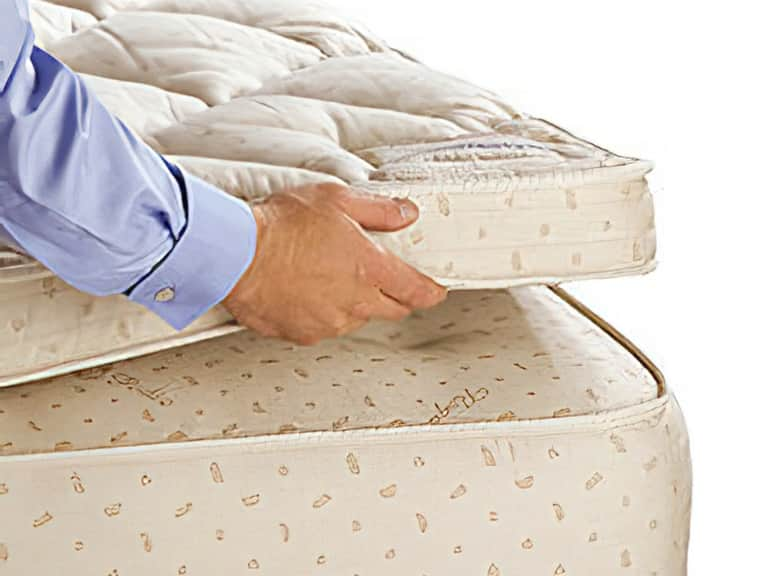
The mattress and topper matter, too. A topper can change the surface feel and warmth of the bed, while a mattress protector may add another layer between the sleeper and the sheet. If you are evaluating sheets after changing a mattress or adding a layer, give the complete setup a little time. What seems like a sheet problem may be an interaction among several materials.
Thread count: a detail, not a verdict
Thread count appears prominently on many sheet labels, but it is not a simple ranking of comfort. It describes the number of threads counted in a square inch of fabric, though counting methods and yarn construction can complicate comparisons. A higher number does not automatically mean a better sheet, and it cannot tell you whether you will prefer percale’s crispness or sateen’s smoothness.
For a more useful comparison, look at the full description. Identify the fiber, weave, fabric weight if provided, mattress fit, care instructions, and any clearly stated certification. A 270-thread-count percale, for instance, may be chosen for its breathable, crisp feel rather than for a number intended to suggest density or luxury. The fabric’s weave and construction are part of what your hand will notice each night.
Organic claims deserve the same careful reading. Certifications can help clarify standards and supply-chain practices, but the exact meaning depends on the certification named and the product’s documentation. “Organic cotton” does not mean every sheet feels alike, nor does it guarantee a particular temperature experience. It is one consideration among several, alongside comfort, fit, durability, and care.
Everyday care: keeping the weave in good shape
Good sheet care is less about elaborate rituals than about consistency. Start with the instructions supplied by the maker; those directions take precedence over broad advice. Cotton sheets are commonly machine washable, but water temperature, cycle, detergent, and drying recommendations can vary. Following the label helps protect color, texture, elastic, and the life of the fabric.
Wash sheets regularly according to your household’s needs, and avoid overloading the machine. Crowded fabric cannot move freely through the wash, and heavy items such as towels may create unnecessary friction. A mild detergent and a suitable cycle are generally more considerate than aggressive treatment. If stains occur, address them in a way that is compatible with the care label rather than reaching immediately for harsh products.
High heat can be hard on cotton over time, particularly when sheets are dried until they are excessively hot and brittle. If the care instructions allow, a moderate dryer setting or line drying can help limit wear. Remove sheets promptly to reduce deep creasing. Percale’s natural crispness often makes wrinkles part of its relaxed character; sateen’s smoother surface may show creases differently. Neither needs to look pressed to be comfortable.
Separating sheets from rougher textiles can also help. Zippers, hooks, and coarse fabrics may snag or abrade the surface during laundering. Store clean sheets fully dry in a breathable space, and rotate between sets if you have more than one. Regular rotation spreads wear and means a favorite set does not have to carry every wash and every night.
Some shoppers expect percale to stay crisp forever or sateen to remain silky without change. Cotton is a natural fiber, and repeated washing and use alter its feel. That evolution is part of owning textile goods. A sheet that becomes more familiar over time may be more inviting than one that stays immaculate in a cupboard.
How to choose between organic cotton percale and sateen
A practical decision can be made in a few steps. First, name the feeling you want when you climb into bed. If the answer is cool, crisp, and light, start with percale. If it is smooth, soft, and gently draped, start with sateen. Then consider how that preference interacts with your room and sleeping habits.
- Choose percale if you enjoy a matte, crisp surface. Its airy impression can be appealing to warm sleepers and those who prefer a more structured sheet.
- Consider sateen if you prefer a smooth, supple hand. Its gentle sheen and closer drape may suit people who want bedding to feel soft and enveloping.
- Think about the season and room. A naturally warm room may make percale especially appealing; a cool room may make sateen’s cozy impression welcome.
- Check mattress dimensions and depth. A fitted sheet needs to accommodate the mattress and any topper or pad. Confirm the stated pocket depth before ordering.
- Read the care label. Choose a fabric whose recommended washing and drying routine suits your household.
- Use the product description for specifics. Fiber, weave, size, construction, and certifications are more informative together than any single headline number.
If you remain undecided, begin with the quality you notice most in your current bedding. Perhaps it is too warm, too slippery, too rough, or too limp. Translate that observation into a preference: more airflow, a smoother surface, a firmer hand, or a softer drape. This turns shopping from a hunt for the universally “best” organic cotton sheets into a search for the sheets most likely to feel right to you.
Common questions about sheet weave
Are percale sheets cooler than sateen sheets?
Percale often feels cooler and airier because of its crisp, matte character and less fluid drape. Sateen may feel warmer or more enveloping. Individual experience varies with fabric weight, room conditions, bedding layers, and personal preference, so the difference is best treated as a tendency rather than a guarantee.
Is sateen made from satin?
No. Cotton sateen is cotton woven in a way that produces a smooth surface and subtle sheen. Satin is a different fabric designation and is often associated with silk or synthetic fibers. The similar names can be confusing, but cotton sateen remains a cotton textile.
Does organic cotton determine whether sheets are crisp or soft?
Not on its own. Organic describes the cotton’s production standards, not a specific hand feel. The weave is one major influence on texture, while yarn, finishing, fabric weight, and laundering also matter. Organic cotton can be used for both percale and sateen sheets.
Will percale soften after washing?
Percale commonly softens with use and laundering, although the amount depends on the particular fabric and how it is cared for. Its crisp character may remain even as it becomes more supple. Follow the manufacturer’s care instructions to avoid unnecessary wear.
Is a higher thread count always better?
No. Thread count is one specification, not a complete measure of quality or comfort. Weave, fiber, yarn, construction, finishing, and fit all contribute to how sheets feel and perform. Compare the whole product description rather than choosing by the largest number.
Can percale and sateen be mixed on one bed?
Yes. Bedding does not have to arrive as a uniform set. Some people prefer a percale fitted sheet and a sateen top sheet, or use different pillowcases to suit individual preferences. The only important question is whether the combination feels comfortable and fits the bed.
A small decision with a nightly effect
Sheets are among the simplest materials in a bedroom, and among the most intimate. They are handled in the morning, pulled back at night, and experienced for hours at a time. The difference between percale and sateen is therefore not merely technical. It is a difference in the character of the bed: crisp or fluid, matte or lightly luminous, airy or gently close.
Organic cotton can be a thoughtful choice for shoppers who value the standards behind the fiber, but the weave remains central to the question of comfort. Percale suits those drawn to a cool, structured feel. Sateen suits those who want smoothness and drape. Neither promises perfect sleep, and neither needs to. The best sheet is the one that feels at home in your room, fits your mattress, works with your care routine, and makes the ordinary act of getting into bed a little more pleasant.
When choosing, let your own hand—and your own nights—be the final authority. A label can describe a weave; only experience can tell you whether it is the right one.